
What is Cloud-Based ERP Software?

Wire cable and rope manufacturers and distributors that use a legacy ERP system commonly experience the same frustrations: limited visibility into what’s happening on the floor, spending more money than they’d like on maintaining the infrastructure, and difficulty scaling. Although these systems have been tried and true for many years, they can’t keep up with modern cloud-based options.
By switching to a secure, internet-based environment, you get the tools you need to optimize operations without the overhead or limitations of on-premise servers. The Rubicon Group’s ERP software is purpose-built to help wire cable and rope manufacturers scale with greater inventory control, end-to-end lot traceability, clearer reporting, and operational efficiency.
Table of Contents
- What Is Cloud-Based ERP Software and How Does It Differ from an On-Premise Solution?
- Why Are Manufacturers and Distributors Moving to Cloud-Based ERP Software?
- Common Signs It May Be Time to Move to a Cloud ERP
- Upgrade to a Cloud-Based ERP with Rubicon
- Frequently Asked Questions
What Is Cloud-Based ERP Software and How Does It Differ from an On-Premise Solution?
Cloud-based ERP software is an enterprise resource planning system hosted on remote servers and delivered over the internet, rather than installed on hardware you own and manage. Instead of running your ERP on local servers at your facility, you access it through a web browser, and your vendor manages the underlying infrastructure.
Most cloud ERP systems are delivered as Software-as-a-Service (SaaS). You pay a subscription to use the platform without managing servers, databases, or software installations yourself. Some businesses opt for a private hosted environment for greater control, while others use a hybrid model that connects cloud and on-premise systems. Regardless of deployment model, your data is centralized in one place, giving every team a single source of truth.
Traditional ERP Challenges
- Recurring maintenance costs for servers and hardware that need to be upgraded, maintained, and replaced, all at your expense.
- Cumbersome and inefficient software updates that often require outside consultants and extended downtime.
- Limited remote access makes it difficult for managers, sales teams, or satellite locations to get the information they need in real time.
- Scalability constraints make adding new locations, business units, or users far more complicated than it should be.
- The systems are IT-dependent, and routine issues can pull internal teams away from higher-value work.
Cloud ERP Advantages
- Less time managing infrastructure. Your vendor maintains the servers, security patches, and backups.
- Faster time to value. Cloud ERP deployments typically move faster than traditional on-premise implementations.
- Your vendor manages complex upgrade cycles and schedules downtime, so you don’t have to.
- With data backed up and hosted off-site, you’re better protected against local outages, hardware failures, or disasters.
- Whether you’re managing one facility or several, everyone works from the same system and sees the same data in real time.
Why Are Manufacturers and Distributors Moving to Cloud-Based ERP Software?
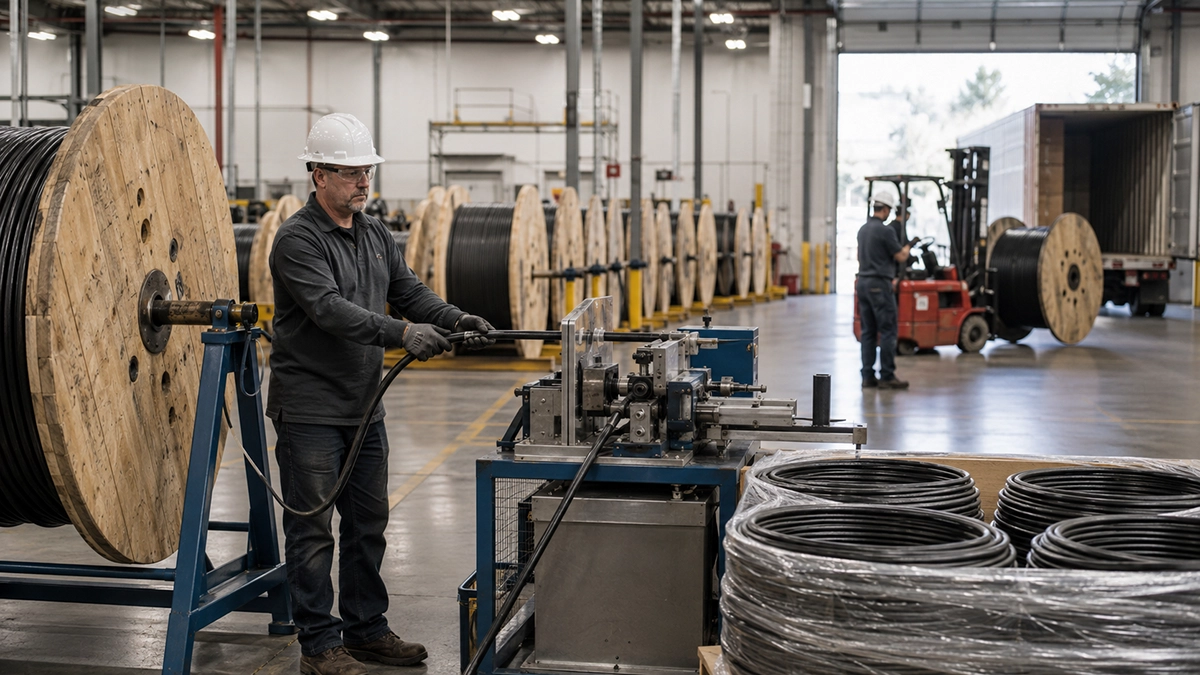
Wire cable and wire rope manufacturers and distributors are moving to cloud platforms because their legacy systems can no longer keep up with business demands. Cloud-based ERP software offers several advantages:
Improved Operational Visibility
Everyone works from the same information at the same time. You can see inventory levels, production status, and order activity in real time, which means you can make faster decisions and reduce miscommunication among purchasing, production, and sales.
Greater Scalability for Growth
Growth inherently creates complexity. Legacy systems often buckle under the pressure of new locations, acquisitions, and higher transaction volumes. A cloud platform supports growth, whether you’re opening a second facility or integrating a newly acquired business. Instead of reconfiguring new technology architecture with every business change, you can plug right into the same system and get going fast.
Reduced Technology Burden
Hardware maintenance, system administration, and upgrades consume time and budget that could go elsewhere. Moving to the cloud shifts that responsibility to your vendor, frees up your internal resources, and makes technology costs more predictable.
Stronger Foundation for Traceability and Compliance
In wire cable and wire rope manufacturing, traceability is expected. Cloud ERP gives you better access to the operational data you need to track materials from receipt through finished goods, support audits, and generate compliance documentation. All data lives in a centralized system rather than scattered across spreadsheets and legacy databases, so reporting is faster and more reliable.
Common Signs It May Be Time to Move to a Cloud ERP
Issues with legacy ERP systems usually appear gradually. It can be difficult to realize the trouble something causes when you’re accustomed to using it daily. Here are some things to keep an eye out for if you suspect it might be time to make the switch to a cloud-based ERP.
- Upgrade cycles are getting more expensive and disruptive.
- Pulling real-time inventory or production data takes significant effort.
- IT maintenance is consuming more internal resources than it used to.
- Your current system makes it difficult to add locations, integrate acquisitions, or support higher transaction volumes.
- Your ERP vendor has scaled back support, slowed development, or left known issues unresolved.
One or more of these signs could mean your system is no longer the right fit for your business. Take a deeper look at the signs that it’s time to upgrade your wire and cable ERP.
Upgrade to a Cloud-Based ERP with Rubicon
Legacy ERP systems demand ongoing hardware investment, costly upgrades, and internal IT resources, while leaving you with limited visibility and a platform that stunts growth. Cloud-based ERP replaces that overhead with real-time data, centralized operations, and a system that grows with your business.
Rubicon is purpose-built for wire, cable, and rope manufacturers and distributors, not retrofitted from a generic platform. You get real-time inventory visibility, end-to-end lot traceability, and dedicated industry support. Learn more about switching to cloud-based ERP software.
Frequently Asked Questions
What is cloud-based ERP software?
Cloud-based ERP software is an enterprise resource planning system hosted on remote servers and accessed through a web browser, rather than installed on hardware at your facility. Your vendor manages the infrastructure while you and your team access the system from anywhere with an internet connection.
Is cloud ERP more secure than on-premise ERP?
In most cases, yes. Cloud ERP vendors invest heavily in security infrastructure (encryption, access controls, regular audits, and automated backups). On-premise systems place the full responsibility for data security and disaster recovery on internal teams, which don’t always have the resources to match that level of data security.
When should a company consider moving to a cloud ERP?
A company should consider moving to a cloud ERP when upgrades are becoming costly or disruptive, real-time inventory or production data is difficult to access, IT maintenance is consuming too many internal resources, or the current system can no longer support new locations, acquisitions, or higher transaction volumes.
Next Steps
The Last Software You'll Ever Need
Since 1984, our cloud-based enterprise resource planning software has helped over 200 businesses worldwide. Ready to learn more about how you can improve operations?